
Hiking through deep snow-covered forests, creating new tracks, relaxing in nature, and staying fit even in winter – these are just a few of the fascinating benefits of snowshoeing. We’ve created an equipment list for our guided snowshoe tours to help you keep track of what you’ll need.
General Information
- Small backpack with non-alcoholic drinks, 1.5 to 2 liters depending on the tour and the person; warm tea in a thermos is ideal. (Adequate hydration is essential. It’s better to drink in small sips several times before you get very thirsty.)
- Small snacks, depending on the tour and the person; good energy sources include chocolate, nuts, and dried fruit. (As the temperature drops, the body’s need for fat increases.)
- Snowshoes
- Telescopic poles with snow baskets; these provide support and save energy; height-adjustable is best.
- Sunglasses and sunscreen if the event takes place during the day.
- Headlamp if the event takes place in the evening.
Clothing
We recommend wearing winter clothing in layers (also known as the onion principle). Even without perfect outdoor gear, you can be outdoors in winter. The layering principle has the advantage of creating a kind of air cushion between the individual garments, which insulates the body well. Generally, it’s best not to dress too warmly to avoid excessive sweating. We also recommend bringing an extra light sweater for breaks, as the body cools down quickly without movement.
- Base layer: functional underwear keeps the body dry and warm
- Warm, knee-high socks
- Fleece or warm sweater (mid-layer): provides insulation
- Water-repellent jacket (shell layer): protection against snow, water, and wind
- Water-repellent pants (lined ski pants are generally unsuitable for snowshoeing, as they are often too warm. Hiking pants, for example, with long thermal underwear underneath or rain pants over them, are also an option (depending on the temperature and your personal sensitivity to cold).)
- Hat or headband (the body loses a significant amount of heat through the head, so this is very important!)
- Water-repellent gloves
- Waterproof hiking or winter boots, ankle-high
- Gaiters: prevent fresh snow from getting into the boots
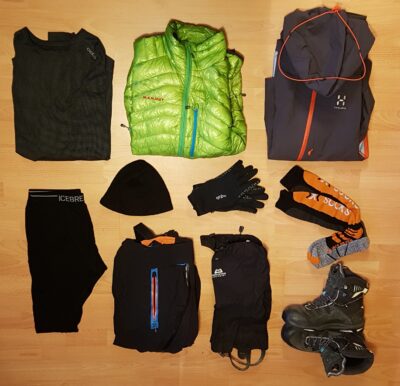
Top: Base, mid, and shell layers / Middle: Hat, gloves, socks / Bottom: Base, shell, gaiters, winter boots